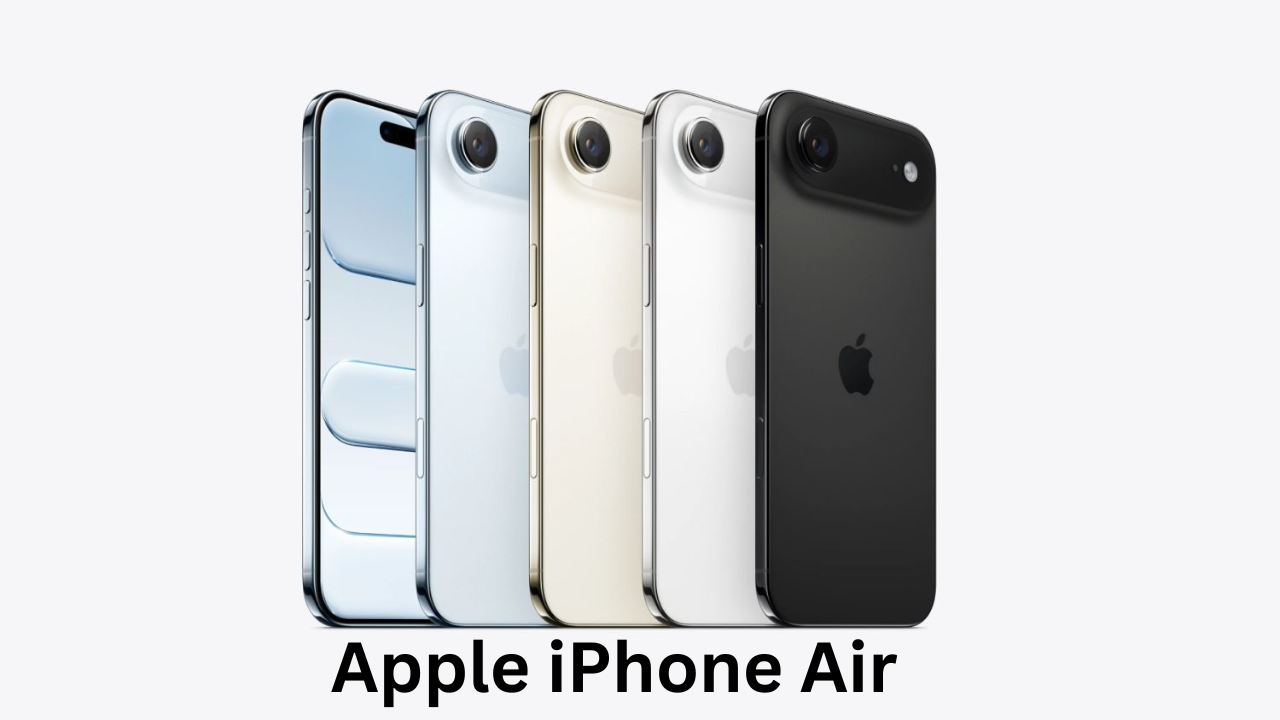
Apple shook up its iPhone lineup in September 2025 with the launch of the iPhone Air — a device that prioritizes extreme thinness and lightness without fully sacrificing pro-level capabilities. Positioned as a bold new direction, it replaces the traditional Plus model and targets users who crave a premium feel that almost disappears in your hand.
Priced starting at $999 for 256GB, the iPhone Air stands out for its breakthrough titanium construction and innovative internal layout. Many call it Apple’s most dramatic design shift in years. In this detailed breakdown, we cover everything from its feather-light build to everyday performance, helping you decide if this ultra-slim iPhone fits your needs in 2026.
Table of Contents
Design and Build: The Thinnest iPhone Ever Made
Apple engineers pushed boundaries to create the iPhone Air. Measuring just 5.6mm thick, it earns the title of the thinnest iPhone ever produced. It weighs a mere 165 grams, making it noticeably lighter and more comfortable for extended use than standard models.
The phone features a grade 5 titanium frame with a polished, high-gloss mirror finish that feels elegant and premium. A precision-milled “plateau” on the back houses the camera system, speaker, and key components, freeing up internal space for a larger battery despite the slim profile.
Front and back protection comes via advanced Ceramic Shield — with Ceramic Shield 2 on the front delivering up to 3x better scratch resistance. Apple claims the iPhone Air is more durable than any previous model, resisting bends and daily wear better than expected for such a thin device. It maintains IP68 dust and water resistance.
The design includes the Action button for quick shortcuts and Camera Control for instant launches or visual intelligence features. Available colors include Space Black, Light Gold, Sky Blue, and Cloud White — sleek options that highlight the minimalist aesthetic.
In hand, the iPhone Air feels revolutionary. It nearly disappears against your palm, yet it doesn’t feel fragile. The flat edges and balanced weight distribution make one-handed use enjoyable, though the thinness can take some getting used to if you’re coming from thicker iPhones.
Size and Weight:
- Thickness: 5.6mm
- Weight: 165g
- Display size contributes to a larger footprint (roughly between iPhone 17 and 17 Pro Max dimensions)
This combination of size, weight, and strength makes the iPhone Air ideal for users who prioritize portability and pocketability.
Storage Options
The iPhone Air starts at 256GB and scales up to 512GB or 1TB. All models use fast NVMe storage for quick app launches, file transfers, and media handling. With 12GB of LPDDR5X RAM, it handles multitasking, Apple Intelligence features, and future software updates smoothly. No expandable storage exists, so choose your capacity wisely based on your photo, video, and app library needs.
Display: Immersive and Smooth for Everyday Enjoyment
The iPhone Air boasts a 6.5-inch Super Retina XDR OLED display with ProMotion technology that adapts up to 120Hz for buttery-smooth scrolling, animations, and gaming. It supports an Always-On mode that drops to 1Hz for efficiency when idle.
Peak brightness reaches an impressive 3000 nits outdoors, ensuring excellent visibility even in direct sunlight, with improved contrast ratios. The panel delivers vibrant colors, deep blacks, and precise HDR content playback — perfect for streaming, editing photos, or browsing.
Thinner bezels enhance the immersive feel, while the large size strikes a sweet spot for media consumption without making the phone feel oversized in your pocket. The anti-reflective coating on the Ceramic Shield further reduces glare.
Whether you’re watching videos, playing graphics-intensive games, or reading in bright conditions, the display on the iPhone Air elevates the experience and justifies the slim design focus.
Camera System: 48MP Fusion Main with Versatile Processing
Instead of a multi-lens array, the iPhone Air relies on a single 48MP Fusion Main camera on the back. Thanks to advanced computational photography and pixel-binning, it effectively delivers the equivalent of four lenses — handling wide, macro, and zoomed perspectives with impressive results.
Image quality shines in good lighting with sharp details, natural colors, and excellent dynamic range. Low-light performance benefits from the large sensor and Apple’s processing, producing clean shots with minimal noise. The camera system supports features like Visual Intelligence and quick launches via the Camera Control button.
On the front, an 18MP Center Stage camera takes center stage for selfies and video calls. It offers wide-angle capture for groups and intelligent framing that keeps you centered during movement.
While some users miss a dedicated ultrawide or telephoto lens found on Pro models, the 48MP Fusion setup performs remarkably well for everyday photography and content creation. It trades hardware variety for a cleaner design and thinner body.
Video: High-Quality Recording with Smart Features
The iPhone Air records stunning video thanks to the powerful main sensor and efficient processing. Expect smooth 4K footage with excellent stabilization, rich colors, and cinematic modes. The front camera supports high-quality video calls and vlogs with Dual Capture options.
Apple’s software optimizations keep video consistent across lighting conditions. While it may not match the multi-camera flexibility of Pro models for advanced creators, casual users and social media enthusiasts find the results more than satisfying.
Performance: A19 Pro Chip Delivers Pro Power in a Slim Package
At the heart of the iPhone Air sits the A19 Pro chip, paired with Apple’s custom N1 wireless chip and C1X modem. This combination makes the device one of the most power-efficient iPhones ever, balancing high performance with excellent thermal management despite the thin chassis.
You get blazing-fast speeds for demanding apps, gaming, and on-device AI tasks via Apple Intelligence. The GPU handles graphics smoothly, while the Neural Engine accelerates machine learning features without draining the battery quickly.
In real-world use, the iPhone Air feels responsive and future-proof. It runs cooler than expected for its slim form, thanks to clever internal architecture and software tweaks. Multitasking, editing, and augmented reality experiences perform admirably.
Battery and Charging: Remarkable All-Day Life Despite the Thinness
Apple maximized every millimeter inside the iPhone Air to fit a capable battery. Thanks to the efficient A19 Pro, C1X modem (which uses significantly less power), and optimized internals, the phone delivers fantastic all-day battery life for most users.
Heavy users may reach for the optional MagSafe Battery Pack for extra juice on long days. Wired and MagSafe wireless charging speeds are solid, though not the fastest in the industry — a common trade-off in ultra-thin designs.
Battery health features and intelligent management help maintain capacity over time. In practice, many owners report comfortable endurance for mixed use including streaming, photography, and browsing.
Biometrics and Sensors
The iPhone Air uses Face ID for secure, convenient unlocking and authentication. It works reliably even in varied lighting and with accessories like masks or glasses in supported scenarios.
Standard sensors include accelerometer, gyroscope, proximity, ambient light, and barometer. These support features like auto-brightness, spatial audio, and motion-based interactions. The Action button and Camera Control add customizable physical inputs for faster access.
Cellular Network and Connectivity
The iPhone Air supports the latest 5G bands globally with Apple’s own C1X modem for improved efficiency and connectivity. It offers strong signal performance and lower power consumption during data use.
Additional connectivity includes:
- Wi-Fi 7 support for ultra-fast wireless speeds
- Bluetooth with the N1 chip
- Ultra Wideband for precise Find My tracking
- MagSafe for magnetic accessories and charging
- USB-C port with data and video output capabilities
No physical SIM tray in many regions (eSIM focus) keeps the slim profile intact. Speakers deliver clear, balanced audio suitable for media and calls.
Operating System: iOS with Apple Intelligence
The iPhone Air launched with iOS 26 and receives ongoing updates with the latest security patches and features. The clean, intuitive interface benefits from deep integration with the A19 Pro chip, unlocking advanced Apple Intelligence capabilities like smarter writing tools, image generation, and on-device processing.
Customizations, notifications, and privacy controls remain top-notch. The slim hardware pairs beautifully with software optimizations that maximize efficiency and smoothness.
What’s in the Box
Apple keeps the iPhone Air packaging eco-friendly and minimal:
- iPhone Air device
- USB-C charging cable
- Documentation and safety information
- Apple stickers (in some regions)
No charger or earbuds are included, encouraging users to reuse existing accessories or purchase MagSafe-compatible options separately.
Final Verdict: A Bold, Premium Choice for Thinness Lovers
The Apple iPhone Air delivers a compelling package if you value extreme portability and a premium feel. Its 5.6mm thin titanium design, lightweight construction, vibrant 6.5-inch ProMotion display, and efficient A19 Pro performance create a phone that feels futuristic and enjoyable to carry daily.
The single 48MP Fusion camera handles most scenarios admirably, while all-day battery life and top-tier software support add practicality. However, the lack of multiple rear lenses and potential compromises for the slim form (like reliance on MagSafe for extended power) may not suit power users or dedicated photographers.
If you prioritize a device that feels light and modern without sacrificing core iPhone strengths, the iPhone Air stands out as a unique option in Apple’s 2026 lineup. It appeals especially to those upgrading from older models who want something fresh and pocket-friendly.
Pros:
- Ultra-thin 5.6mm and 165g lightweight design
- Durable titanium build with advanced Ceramic Shield
- Smooth 120Hz 6.5-inch display with high brightness
- Efficient A19 Pro performance and Apple Intelligence
- Impressive all-day battery in a slim body
Cons:
- Single rear camera limits versatility
- Battery may need topping up for heavy users
- Higher starting price for the slim design focus
- No major camera upgrades over some non-Pro models
Would the iPhone Air’s ultra-thin profile win you over, or do you prefer more traditional camera setups and battery capacity? Share your thoughts in the comments!
