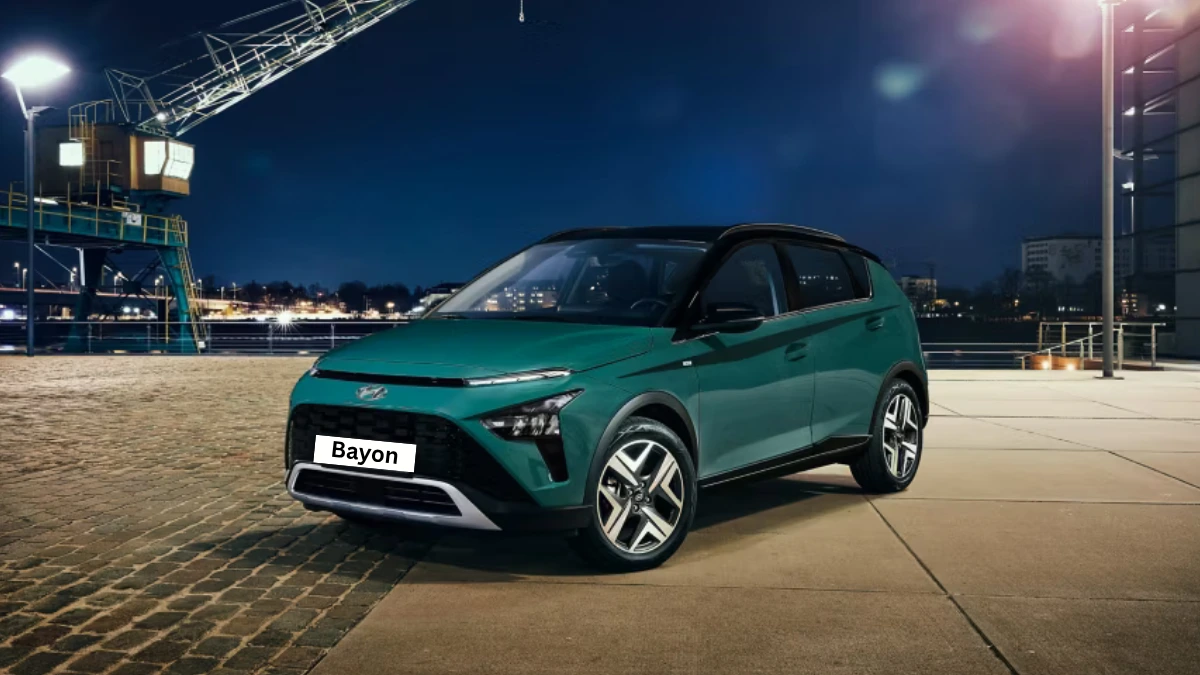
Hyundai Bayon enters 2025 with an updated look, advanced safety features, and the promise of delivering one of the most complete compact SUV experiences in its class. Designed for city life but versatile enough for occasional getaways, this European-inspired SUV is tailored for practical buyers who want bold styling, great fuel efficiency, and everyday usability.
Positioned below the Creta and Kona, the Hyundai Bayon takes on rivals like the Renault Captur, Volkswagen T-Cross, and Toyota Yaris Cross. But does it truly stand out, or is it just another face in the crowd?
Let’s break down every detail to help you decide whether this is the right SUV for your garage in 2025.
Table of Contents
Sharp European Design That Breaks the Norm
Hyundai’s design language has been evolving, and the 2025 Bayon shows how far it has come. With its edgy lines, parametric grille, arrow-shaped headlights, and crossover silhouette, the Bayon manages to look fresh and modern without being overdone.
Exterior Design Specifications:
| Parameter | Specification |
|---|---|
| Length | 4180 mm |
| Width | 1775 mm |
| Height | 1490 mm |
| Wheelbase | 2580 mm |
| Ground Clearance | 183 mm (approx.) |
| Boot Space | 411 liters |
| Wheels | 16″/17″ alloy wheels |
Key Design Features:
- Slim LED DRLs and separate main headlights
- Wide, cascading grille
- Dynamic rear LED tail lights shaped like arrows
- Skid plates and contrast cladding
- Floating roof effect with optional dual-tone paint
This car definitely turns heads in the compact SUV category, especially in urban environments where style matters.
Interior Specifications: Clean, Connected, and Family-Friendly
Inside, the Hyundai Bayon offers a surprisingly roomy cabin for a compact SUV. It strikes a smart balance between minimalist design and essential tech. Everything feels well-built and functional, with Hyundai’s typical attention to quality and usability.
Interior Highlights:
| Feature | Details |
|---|---|
| Seating Capacity | 5 passengers |
| Infotainment Display | 10.25-inch touchscreen |
| Digital Instrument Cluster | 10.25-inch (top variants) |
| Connectivity | Apple CarPlay, Android Auto |
| Upholstery | Fabric (premium trims optional) |
| Ambient Lighting | Available in top variants |
| Cargo Flexibility | 60:40 split rear seats |
Additional Features:
- Wireless phone charging
- Rear A/C vents
- Ample door pockets and center storage
- USB-C charging ports front and rear
Whether you’re a solo commuter or a small family, the Bayon interior delivers the essentials without clutter.
Engine Specifications: Focused on Efficiency and Daily Usability
The Hyundai Bayon 2025 prioritizes real-world efficiency and smoothness over brute performance. That makes it ideal for urban and occasional highway driving, especially for budget-conscious users.
Engine Options:
| Engine Type | 1.0L T-GDi Turbo Petrol |
|---|---|
| Displacement | 998 cc |
| Power Output | 100 PS / 120 PS (variant-based) |
| Torque | Up to 172 Nm |
| Transmission | 6-speed iMT / 7-speed DCT |
| Fuel Type | Petrol |
| Claimed Mileage | 18–20 km/l (depending on trim) |
The turbo-petrol motor offers decent low-end punch and excellent drivability. The 7-speed dual-clutch transmission adds convenience for urban traffic, while the iMT (clutchless manual) option keeps costs down.
Driving Experience: Light, Nimble, and Safe
Thanks to its compact dimensions and well-tuned suspension, the Bayon offers one of the most refined driving experiences in its class. It feels well-planted on the highway and nimble in the city, which is ideal for everyday usage.
Driving Highlights:
- Light steering with quick return
- Firm, confidence-inspiring brakes
- Balanced suspension that absorbs potholes
- Smooth gear transitions (especially in DCT)
- High seating position for better road view
Safety is a big focus in this model too. The 2025 Bayon brings ADAS features to the segment, making it a practical and safe choice for families.
Standard Equipment Across Variants
Hyundai rarely skimps on features, and the Bayon is no exception. Even the base model feels well-equipped. Higher trims introduce a range of smart tech and safety systems.
Common Standard Features:
- Dual airbags
- ABS with EBD
- ESC and hill-start assist
- Rear parking sensors
- Lane keep assist
- LED DRLs
- Cruise control
Higher Trim Adds:
- 360-degree camera
- Adaptive cruise control
- Blind spot monitoring
- Highway driving assist (HDA)
- Rear cross-traffic alert
- Full LED headlamps
- Connected car tech (BlueLink)
This list makes it clear—the Bayon doesn’t cut corners. It offers a rich mix of convenience and safety at every level.

How the Hyundai Bayon 2025 Compares to Rivals
In the crowded compact SUV market, standing out takes more than bold styling. Here’s how the Bayon stacks up against some of its key competitors:
| Model | Boot Space | Safety Features | Infotainment | Mileage (Petrol) |
|---|---|---|---|---|
| Hyundai Bayon | 411 L | ADAS + 6 Airbags | 10.25″ | 18–20 km/l |
| Renault Captur | 406 L | 4 Airbags (Limited) | 7″ | 16–18 km/l |
| Toyota Yaris Cross | 390 L | ADAS | 8″ | 17–19 km/l |
| VW T-Cross | 385 L | ESC, 6 Airbags | 8″ | 18–19 km/l |
The Bayon not only holds its ground—it often edges ahead on tech and boot capacity, making it a well-rounded pick for practical users.
Who Should Consider the Hyundai Bayon?
This compact SUV is perfectly suited for:
- Young professionals needing a stylish and tech-savvy vehicle
- Small families seeking safety and efficiency
- Urban drivers who want compact size with SUV stance
- Buyers upgrading from hatchbacks who want premium feel
- Budget-conscious users wanting value without compromises
With balanced proportions, good road manners, and plenty of creature comforts, the Hyundai Bayon offers wide appeal across user types.
FAQs – Hyundai Bayon 2025 Questions Answered
Is the Hyundai Bayon spacious enough for family use and road trips?
Yes, the Hyundai Bayon offers a roomy rear seat and 411-liter boot space, which is larger than many rivals in its class. It easily accommodates weekend luggage, shopping bags, or even baby strollers.
How does the Bayon perform in daily city driving and traffic?
Thanks to its light steering, compact footprint, and excellent visibility, the Hyundai Bayon is one of the easiest compact SUVs to drive in urban traffic. The DCT variant especially shines in start-stop conditions.
Is the Bayon a better choice than the Hyundai Venue or Creta?
The Bayon slots below the Creta and Venue in global markets. While the Creta is bigger, the Bayon is better suited for city driving and offers most of the must-have features in a smaller, more affordable package.
What are the safety features available in the Hyundai Bayon 2025?
The Bayon offers lane keep assist, forward collision warning, rear cross-traffic alert, blind spot monitoring, ESC, hill assist, and up to six airbags—making it one of the safest compact SUVs in its class.
What is the real-world fuel economy of the Bayon?
In actual use, the 1.0L turbo petrol engine delivers between 16–18 km/l in city conditions and up to 20 km/l on highways, depending on the variant and driving style.
Verdict: Is the Hyundai Bayon the Best Compact SUV in 2025?
The Hyundai Bayon 2025 gets a lot of things right. It looks distinctive, offers real-world practicality, comes packed with safety and tech features, and drives exactly the way a modern compact SUV should.
While it’s not the most powerful SUV out there, its strengths lie in usability, quality, and long-term value—three things that matter more than performance alone in the compact segment.
If you’re shopping for a feature-loaded, safe, and refined SUV under 4.2 meters, the Hyundai Bayon deserves to be high on your list.
