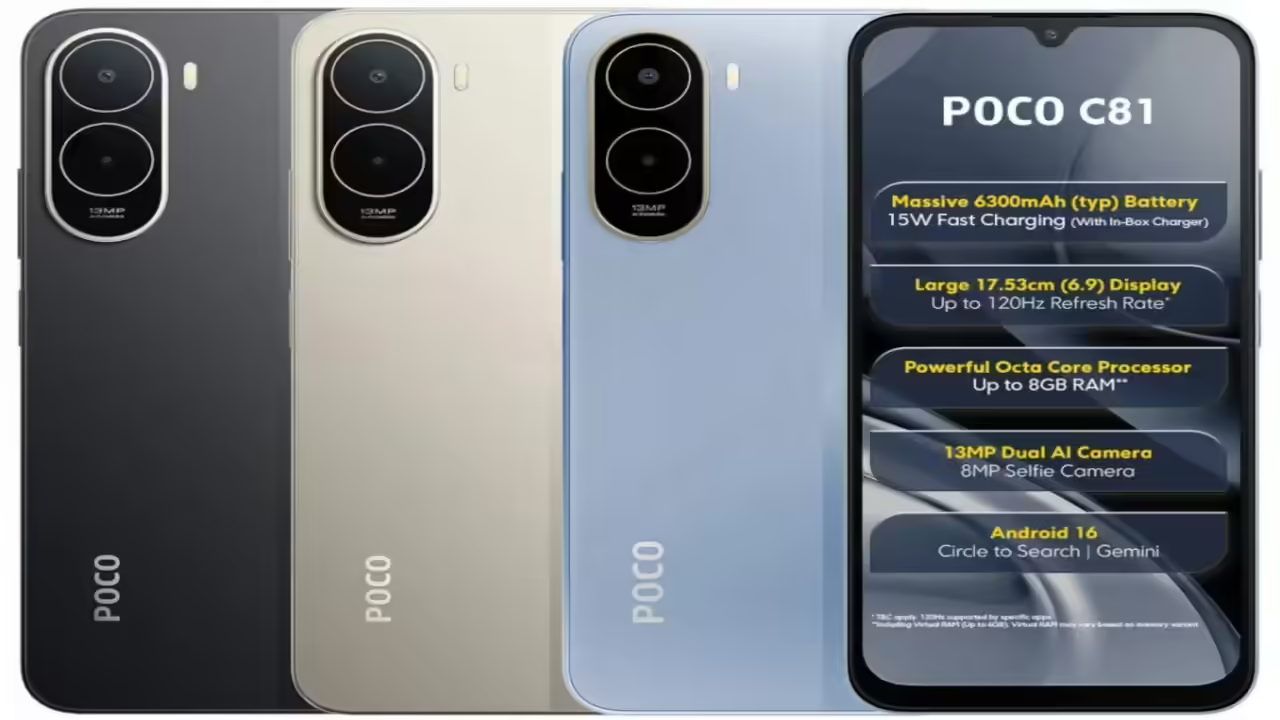
The Xiaomi Poco C81 is a fresh entry in the budget smartphone segment, launched in April 2026. It targets users who want a big, smooth screen, solid battery life, and reliable daily performance without breaking the bank. Priced affordably (around ₹10,999 in India for the 4GB + 64GB variant), this 4G phone brings a massive 6.9-inch display with 120Hz refresh rate, a hefty 6300mAh battery, and Android 16-based HyperOS 3 right out of the gate.
If you’re shopping for an entry-level device that handles streaming, social media, light gaming, and long days on a single charge, the Poco C81 deserves a close look. Let’s dive into every key aspect—from its design and build to performance, camera, and connectivity.
Table of Contents
Size and Weight: Comfortable Grip with Premium Feel
The Xiaomi Poco C81 measures 171.6 x 79.5 x 8.2 mm and weighs 208 grams. While not the lightest in its class, the slim 8.2mm profile and balanced weight distribution make it comfortable for extended one-handed use and pocket carry. The plastic frame and back keep costs down while maintaining decent durability, with a glass front for better scratch resistance.
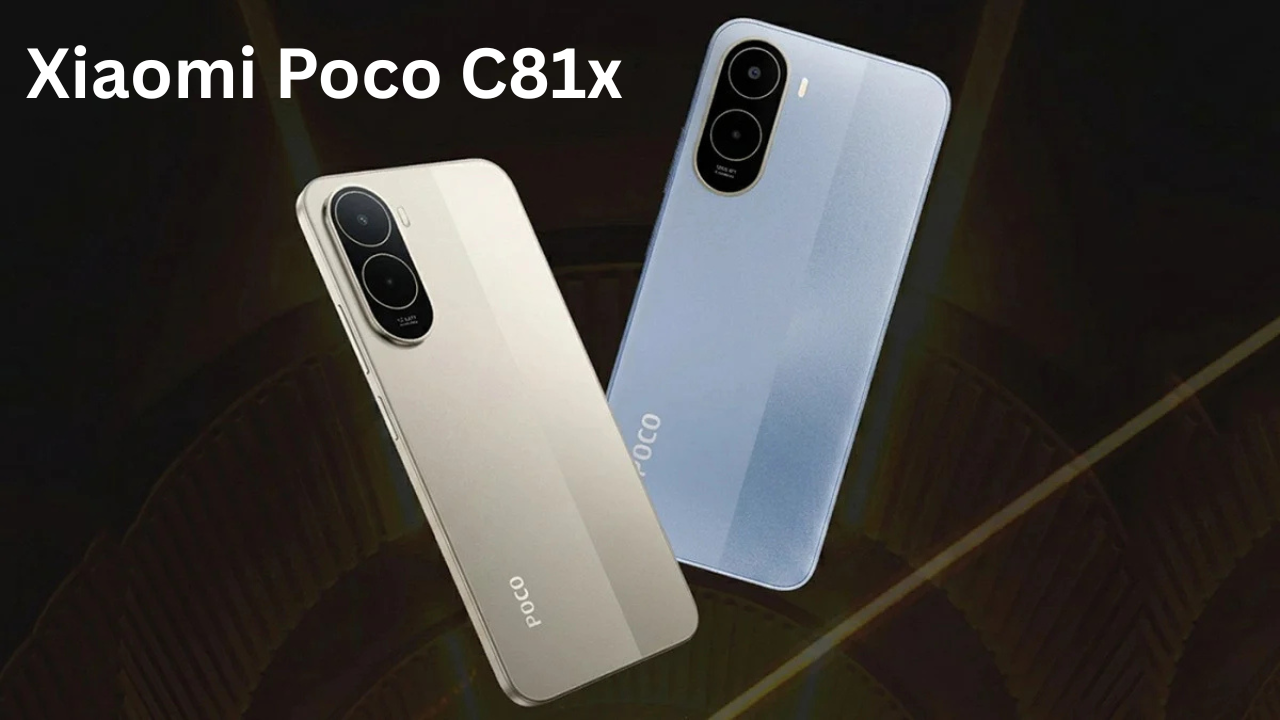
Design-wise, it follows Poco’s signature style with color-block options like Elite Black, Ice Blue, and Sunset Gold. The high-gloss camera ring adds a touch of flair, and the overall build feels solid for daily handling. An IP52 rating provides basic dust and splash resistance, which is a welcome inclusion at this price point for protection against light rain or accidental spills.
Many users appreciate how the tall 20:9 aspect ratio keeps the phone manageable despite the large screen. It won’t feel bulky like some heavier flagships, making it suitable for students, first-time smartphone buyers, or anyone prioritizing screen real estate over ultra-lightweight design.
Storage: Expandable Options for Everyday Needs
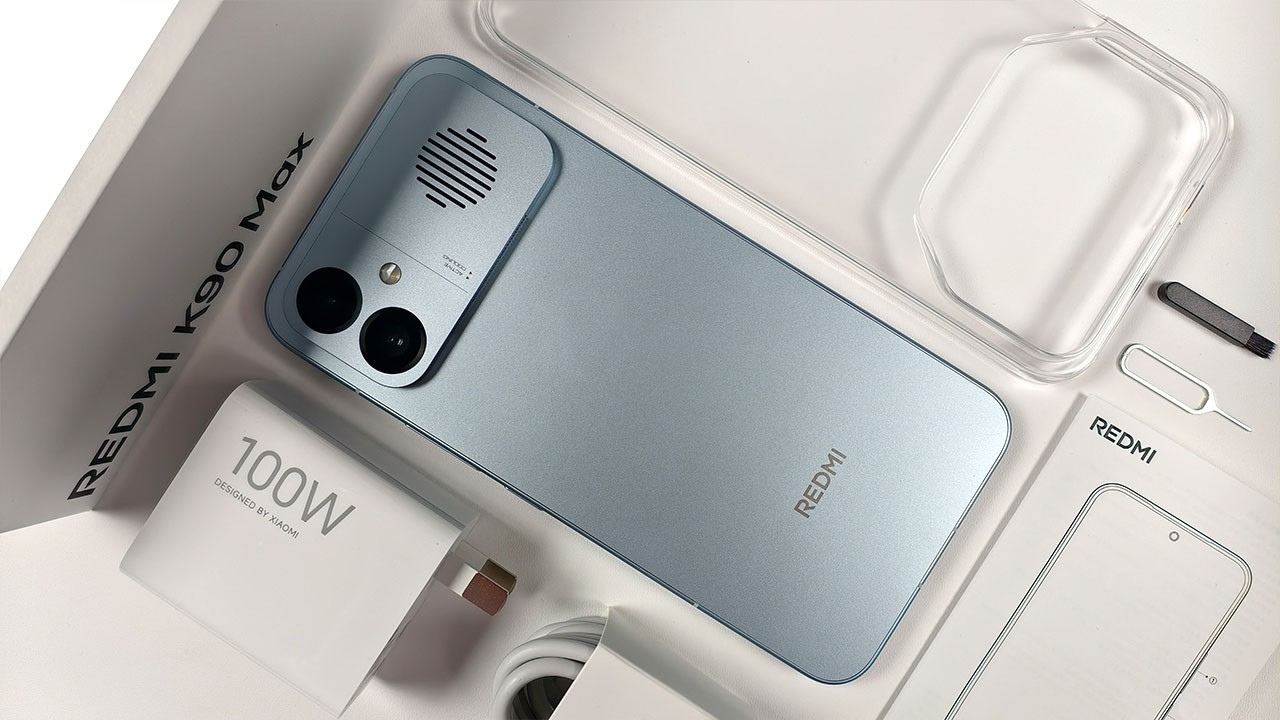
The Poco C81 comes with 4GB LPDDR4X RAM paired with 64GB UFS 2.2 internal storage in its primary variant. This combination delivers decent multitasking for apps like WhatsApp, YouTube, and browsers, while UFS 2.2 ensures faster app loading and file transfers compared to older eMMC storage.
Need more space? The dedicated microSDXC slot supports expansion up to 2TB (or at least 1TB in most similar devices). This is a huge plus for users who store photos, videos, offline movies, or games locally. Memory extension features may allow virtual RAM boosting (up to 8GB in related Pro models), helping with smoother app switching in lighter workloads.
For a budget phone, 64GB base storage with easy expansion strikes a practical balance. Heavy media consumers can add a cheap microSD card without worrying about running out of room quickly.
Display: Immersive 6.9-Inch 120Hz Experience
One of the Poco C81 ‘s strongest selling points is its 6.9-inch IPS LCD display with HD+ resolution (720 x 1600 pixels) and an impressive 120Hz refresh rate. This results in a pixel density of about 254 ppi and a screen-to-body ratio around 84.3%. The tall aspect ratio makes it excellent for watching videos, scrolling feeds, or reading e-books.
The adaptive 120Hz panel (switching between 60-120Hz depending on content) delivers noticeably smoother scrolling and animations compared to standard 60Hz or 90Hz displays in this segment. Brightness reaches up to 800 nits (HBM/peak) with 650 nits typical, allowing decent outdoor visibility in sunlight mode. It also supports DC dimming and comes with TÜV Rheinland certifications for Low Blue Light, Circadian Friendly, and Flicker Free performance—features that reduce eye strain during long sessions.
Colors cover about 83% NTSC with 8-bit depth and a 1500:1 contrast ratio. While not as vibrant as AMOLED panels, the LCD performs well for its price, offering good viewing angles and support for HDR-like content in supported apps. Wet touch technology and 240Hz touch sampling (in similar models) further enhance usability for gaming or precise navigation.
Whether you’re binge-watching Netflix or playing casual games, the large, smooth display makes the Poco C81 feel more premium than its price suggests.
Camera: Practical 13MP Setup for Daily Shots
On the rear, the Xiaomi Poco C81 features a 13MP primary wide camera (f/2.2) accompanied by an auxiliary lens for depth or AI enhancements. It supports modes like HDR, Portrait, Night, Time-lapse, and Document scanning. Video recording tops out at 1080p@30fps, which is adequate for social media clips and video calls but not for high-frame-rate action.
The 8MP front camera (f/2.0) handles selfies and video calls reliably, with features like fill-light, HDR, and Portrait mode. It records up to 1080p@30fps as well.
In good lighting, the main sensor captures decent detail with natural colors for a budget phone. AI scene optimization helps with portraits and landscapes, while Night mode brightens low-light shots reasonably. Don’t expect flagship-level dynamic range or low-light magic, but for social sharing, quick snaps, and video calls, it gets the job done without frustration.
Users often pair it with the large screen for easy framing and editing directly on the device.
Video Capabilities
Video recording on the Poco C81 stays practical: 1080p at 30fps for both rear and front cameras, with 720p as an option. Electronic stabilization isn’t highlighted as a strong point, so expect some shake in handheld footage. Still, it’s sufficient for vlogs, family videos, or uploading short clips to Instagram and TikTok. The auxiliary lens aids in basic bokeh effects during video portraits.
Chips and Performance: Unisoc T7250 for Everyday Tasks
Powering the device is the Unisoc T7250 chipset (12nm process), an octa-core processor with 2x Cortex-A75 cores at 1.8GHz and 6x Cortex-A55 cores at 1.6GHz, paired with a Mali-G57 MP1 GPU. It’s joined by 4GB LPDDR4X RAM.
This setup handles daily tasks smoothly—browsing, social media, messaging, streaming, and light productivity apps. Casual gaming like Candy Crush or PUBG Mobile at low-medium settings works without major hiccups, though heavy titles may require reduced graphics for consistent frame rates.
The 12nm fabrication keeps thermals and efficiency in check, preventing excessive heating during prolonged use. Combined with UFS 2.2 storage, app launches feel snappy enough for the price bracket. HyperOS optimizations further enhance responsiveness.
It’s not a performance monster, but for students, seniors, or secondary phone users focused on reliability over raw power, the T7250 delivers where it matters most.
Battery: All-Day Powerhouse with 6300mAh Capacity
The standout feature for many is the 6300mAh battery (some references note 6000mAh typ in Pro variants). This large cell easily lasts a full day or more with moderate to heavy use, including streaming, calls, and social media. Light users might stretch it to 1.5–2 days.
It supports 15W fast charging, which isn’t the quickest but refills the battery reasonably within 2–2.5 hours. Reverse charging capability adds versatility for topping up accessories. Real-world tests from similar devices show excellent standby efficiency thanks to the efficient chipset and software optimizations.
For users tired of frequent charging, the Poco C81’s battery is a major win in the budget category.
Biometrics: Secure and Convenient Side-Mounted Fingerprint
Security comes via a side-mounted fingerprint sensor integrated into the power button—fast, reliable, and ergonomic for quick unlocks. Face unlock using the front camera serves as a convenient secondary option in good lighting.
These methods work reliably for daily authentication of apps, payments, and device access.
Sensors: Essential Suite for Daily Use
The Poco C81 includes standard sensors: accelerometer, proximity, ambient light, and likely a compass/gyro for basic navigation and orientation needs. It supports wet touch technology for use with damp fingers or in light rain.
No advanced sensors like barometer or IR blaster appear in base specs, keeping things focused on essentials.
Cellular Network: Reliable 4G Connectivity
As a 4G LTE device, the Poco C81 supports dual SIM (Nano + Nano) with GSM/HSPA/LTE bands suitable for most regions, including India and Bangladesh markets. It delivers solid call quality, data speeds for streaming and browsing, and VoLTE support.
No 5G here, but for users in areas with strong 4G coverage or those prioritizing affordability, this is perfectly fine.
Connectivity: Modern Essentials Included
- Wi-Fi: Dual-band Wi-Fi 5 (802.11ac)
- Bluetooth: 5.2 for stable connections with headphones and accessories
- USB: Type-C port (assumed standard)
- 3.5mm headphone jack: Yes, a big plus for wired audio lovers
- NFC: Available in some variants/markets for contactless payments
- FM Radio: Likely supported (common in this segment)
- GPS: Standard satellite navigation
These features cover most daily wireless needs without gaps.
Operating System: Android 16 with HyperOS 3 and Long-Term Support
Out of the box, the Xiaomi Poco C81 runs Android 16 with HyperOS 3 on top. The software feels clean, feature-rich, and optimized for smooth performance on modest hardware. Poco promises up to 4 major Android upgrades and extended security patches—excellent longevity for a budget phone.
HyperOS brings useful tools like improved multitasking, customization options, AI features for camera and system, and a polished interface. Users get a near-stock-like experience with added Poco flair and productivity enhancements.
Regular updates mean better security and new features over time, adding real long-term value.
In the Box On Xiaomi Poco C81
Typical contents for the Xiaomi Poco C81 include:
- The smartphone itself
- 15W charger (availability may vary by region—check with local seller)
- USB Type-C cable
- SIM ejector tool
- Quick start guide and warranty information
- Protective case or screen protector (sometimes included in certain markets)
Confirm exact contents with the retailer, as some regions may ship without the charger to promote sustainability.
Who Should Buy the Xiaomi Poco C81?
The Poco C81 shines as a no-nonsense budget smartphone for:
- Students and first-time users needing a big, smooth screen for media consumption
- Users who value all-day battery life over fast charging
- Anyone wanting expandable storage and a 3.5mm jack
- Buyers in emerging markets seeking reliable 4G performance with modern software
It may not compete with mid-range devices in camera prowess or gaming muscle, but it offers outstanding value in display size, battery endurance, and software support.
Pros:
- Large 6.9″ 120Hz display with eye-care certifications
- Massive 6300mAh battery for extended usage
- Affordable price with expandable storage
- Android 16 + long software support
- Side fingerprint and 3.5mm jack
Cons:
- Only 4GB RAM / 64GB base storage (may feel limiting for power users)
- 13MP camera is average in low light
- 15W charging is slow by 2026 standards
- Plastic build (though durable enough)
Final Verdict
The Xiaomi Poco C81 successfully delivers on its promise as a capable budget phone with standout battery life and an immersive large display. For everyday users in regions like India, Bangladesh, and beyond, it provides real-world usability that punches above its weight class. If your priorities are smooth scrolling, long battery endurance, and affordability, this device is worth serious consideration in 2026.
