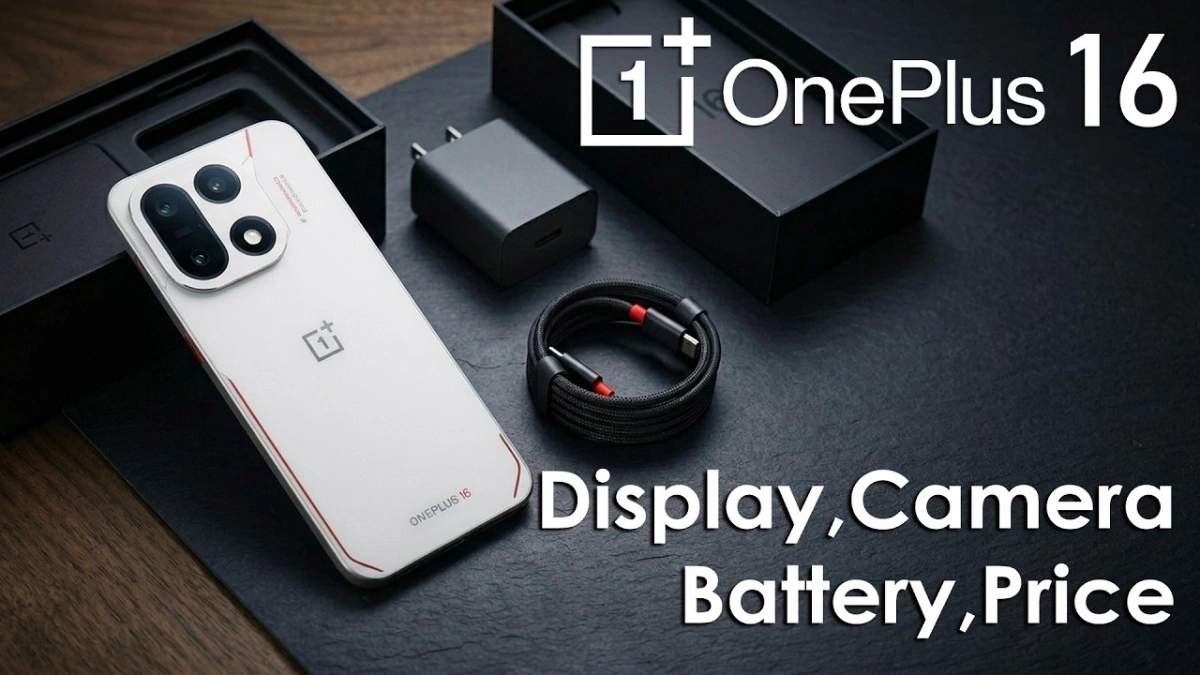
The OnePlus 16 is generating significant excitement as one of the most anticipated flagships of late 2026. Early leaks suggest OnePlus is pushing boundaries in battery technology with a potential 9000mAh cell, ultra-fast charging, and next-generation performance — continuing the brand’s reputation for delivering exceptional value and speed in the premium segment.
While official details remain limited, consistent rumors from reliable sources point to meaningful upgrades in endurance, display smoothness, and processing power. Here’s everything we know so far about the expected specs, features, and real-world potential of the OnePlus 16.
Table of Contents
Revolutionary Battery: Up to 9000mAh Glacier Battery
One of the biggest talking points is the rumored battery capacity. Multiple leaks indicate the OnePlus 16 could pack a massive ~9000mAh silicon-carbon or next-gen “Glacier Battery” cell developed in partnership with CATL. This would mark a substantial jump from the already impressive 7300mAh battery in the OnePlus 15.
The high-density Glacier Battery technology aims to deliver significantly longer runtime without dramatically increasing the phone’s thickness or weight. Combined with efficient power management, this could translate to all-day or even multi-day usage for heavy tasks like gaming, video streaming, photography, and navigation.
Charging is expected to remain a OnePlus strength, with rumors pointing to 120W wired SUPERVOOC fast charging and up to 50W wireless charging. This combination would allow users to go from low battery to full in a very short time while maintaining excellent long-term battery health.
Expected Display: High Refresh Rate LTPO AMOLED
The OnePlus 16 is tipped to feature a 6.78-inch custom BOE LTPO AMOLED display with 1.5K resolution. Leaks suggest it could support an extremely high refresh rate — possibly 165Hz, 200Hz, or even up to 240Hz in certain modes — for exceptionally smooth scrolling, animations, and gaming.
The panel is expected to offer excellent brightness, HDR10+ support, vibrant colors, and advanced dimming technology to reduce eye strain. A flat or minimally curved design with slim bezels should provide an immersive viewing experience suitable for media, productivity, and high-frame-rate games.
Performance: Snapdragon 8 Elite Gen 6 Pro
Powering the device is expected to be Qualcomm’s next-generation Snapdragon 8 Elite Gen 6 Pro chipset (possibly on a 2nm process), paired with LPDDR6 RAM and fast UFS 4.1 storage. Configurations may start from 12GB RAM + 256GB storage and scale up to 16GB or higher with 1TB options.
This setup should deliver flagship-level speed, improved AI capabilities, and better efficiency compared to previous generations. OnePlus’s software optimization and thermal management are likely to ensure sustained performance during demanding tasks without excessive heat.
The phone is expected to launch with OxygenOS 17 based on Android 17, offering a clean, fast interface with thoughtful customizations and long-term update support.
Camera Upgrades
While battery and performance are the main highlights, the camera system is also expected to see improvements. Rumors mention a triple rear setup that could include a 50MP main sensor, 50MP ultra-wide, and a high-resolution 200MP periscope telephoto lens for excellent zoom capabilities.
A 50MP front camera is also frequently mentioned for sharp selfies and video calls. Video recording is likely to support high resolutions with good stabilization and advanced modes. Hasselblad tuning (seen in some OnePlus and OPPO models) may or may not return, but computational photography should deliver natural colors and reliable results.
Design, Build, and Other Features
The OnePlus 16 is expected to maintain OnePlus’s signature sleek design with premium materials, IP68/IP69 rating for durability, and a refined camera module. Weight and thickness are anticipated to remain reasonable despite the large battery, thanks to advanced cell technology.
Additional features may include stereo speakers, improved haptics, Wi-Fi 7, Bluetooth 6.0, NFC, and comprehensive 5G support. Seamless integration with the OnePlus ecosystem (watches, earbuds, etc.) is also likely.
Expected Launch Timeline
According to leaks, the OnePlus 16 could debut in China around October 2026, with global and India releases following in November or later. This places it in the traditional flagship launch window for the brand.
Pricing Expectations
Pricing is still speculative, but the base variant (likely 12GB + 256GB) may start around ₹54,999 to ₹64,999 in India, with higher configurations scaling upward. In Bangladesh, expect unofficial/grey market pricing in the BDT 85,000 to BDT 1,20,000+ range, depending on variant and import factors. Official pricing will be clearer closer to launch.
Who Should Consider the OnePlus 16?
This phone should appeal to power users, gamers, and anyone who prioritizes exceptional battery life and fast charging. The combination of a potential 9000mAh battery and ultra-fast charging could make it one of the longest-lasting flagships of 2026.
If you value smooth high-refresh displays, strong performance, and practical daily endurance over extreme camera specialization (like the OPPO Find X9 Ultra’s 200MP setup) or modular designs, the OnePlus 16 looks promising.
Final Thoughts on the OnePlus 16
Early rumors paint the OnePlus 16 as a significant evolution, with a massive 9000mAh battery, ultra-fast charging, next-gen Snapdragon power, and a high-refresh LTPO display. If these specs materialize, it could set new standards for flagship endurance and value in late 2026.
Of course, many details are still unconfirmed, and real-world performance, camera quality, and software experience will ultimately determine its success. As we get closer to the expected October 2026 China launch, more concrete information should emerge.
For buyers in Bangladesh, keep an eye on official OnePlus channels and trusted retailers for accurate pricing, availability, and warranty details once the phone is announced. The OnePlus 16 has the potential to be a compelling all-rounder that addresses one of the biggest pain points in modern smartphones — battery anxiety.
