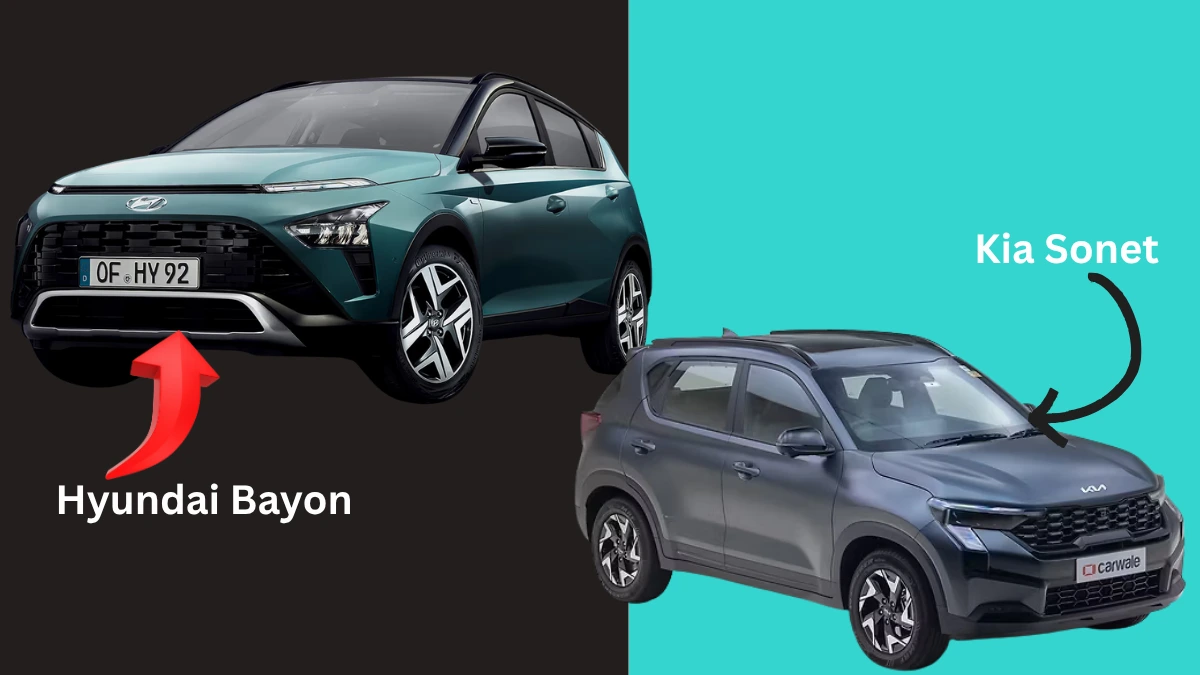
Hyundai and Kia, two automotive giants under the same parent group, are often seen as friendly rivals. They share platforms, technologies, and even engines—but their cars feel entirely different on the road. In this detailed comparison, we explore how the Hyundai Bayon and Kia Sonet stack up against each other, especially for budget-conscious buyers and first-time car owners looking for a compact SUV that offers value and style.
If you’re stuck between these two, this guide dives deep into design, interior, engine performance, tech, and equipment, so you can make an informed decision.
Table of Contents
Hyundai and Kia: A Tale of Two Design Philosophies
While both crossovers fall under the compact SUV category, they appeal to different design sensibilities. Let’s explore how they compare visually and dimensionally.
Design Specifications Comparison
| Feature | Hyundai Bayon | Kia Sonet |
|---|---|---|
| Length | 4180 mm | 3995 mm |
| Width | 1775 mm | 1790 mm |
| Height | 1490 mm | 1642 mm |
| Wheelbase | 2580 mm | 2500 mm |
| Ground Clearance | 183 mm | 205 mm |
| Boot Space | 411 liters | 392 liters |
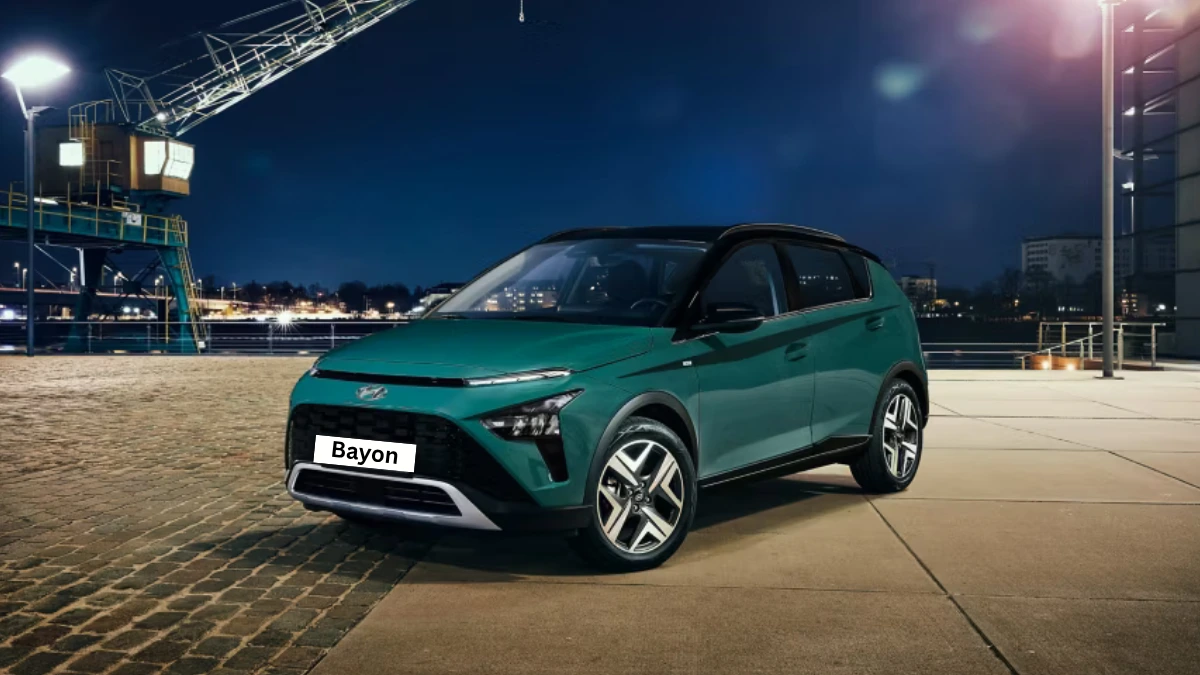
Hyundai Bayon leans toward a sleeker European design with clean lines and angular DRLs. The Kia Sonet, on the other hand, sports a more muscular SUV stance with a wider grille and boxier proportions.
Verdict:
Choose the Bayon for urban elegance, and the Sonet if you prefer bold, SUV-like presence.
Cabin Feel and Interior Specifications
Both SUVs offer feature-packed cabins, but their styling and ergonomics feel different. Hyundai focuses on minimalism and openness, while Kia leans into rich finishes and layered design.
Interior Specifications
| Feature | Hyundai Bayon | Kia Sonet |
|---|---|---|
| Seating Capacity | 5 | 5 |
| Touchscreen Display | 10.25-inch | 10.25-inch (GT Line) |
| Driver Display | 10.25-inch digital cluster | 4.2-inch semi-digital (lower trims) |
| Upholstery | Fabric/Leatherette | Premium Fabric/Leatherette |
| Ambient Lighting | Yes | Yes (Top variant only) |
| Wireless Charging | Yes | Yes |
| Rear AC Vents | No | Yes |
The Bayon stands out with a fully digital cluster and a cleaner dashboard layout. The Sonet, however, offers more comfort-centric features like rear A/C vents and a slightly plusher feel in top variants.
Verdict:
Tech-lovers may prefer the Bayon’s cluster; comfort-seekers might lean toward the Sonet.
Engine Options and Performance Breakdown
Both Hyundai and Kia use the same 1.0L turbo-petrol engine across models but tune them differently. Here’s how they compare on paper:
Engine Specifications
| Engine Type | Hyundai Bayon | Kia Sonet |
|---|---|---|
| Engine | 1.0L T-GDi Petrol | 1.2L NA / 1.0L Turbo / 1.5L Diesel |
| Power (Turbo Petrol) | 100 PS / 120 PS (Hybrid) | 120 PS (Turbo Petrol) |
| Torque (Turbo Petrol) | 172 Nm | 172 Nm |
| Transmission | 6-speed iMT / 7-speed DCT | iMT / DCT / Manual / Auto |
| Fuel Economy (Claimed) | Up to 20 km/l | 18–21 km/l (varies by engine) |
Hyundai Bayon offers mild-hybrid tech in some global markets, giving it an edge in efficiency. The Kia Sonet, however, has more engine options, including a powerful diesel for high-mileage users.
Verdict:
If variety and diesel are important, choose the Sonet. For lighter, efficient petrol use, the Bayon shines.

Driving Experience: City vs Long-Distance Comfort
Let’s look at how these cars behave on real roads.
Hyundai Bayon:
- Tuned for urban smoothness
- Lighter steering and excellent visibility
- Better suited for city and occasional highway trips
Kia Sonet:
- Stiffer suspension—good for highway stability
- More SUV-like commanding road presence
- Heavier steering feel
Verdict:
If you’re a first-time buyer or city commuter, the Bayon offers an easier driving experience. For mixed or highway-heavy use, the Sonet offers a more planted feel.
Features and Standard Equipment: Who Offers More?
Here’s a breakdown of equipment that comes standard or in mid-to-top variants for both:
Key Features Comparison Between Hyundai and Kia
| Feature | Hyundai Bayon | Kia Sonet |
|---|---|---|
| Dual Airbags | Yes | Yes |
| ABS with EBD | Yes | Yes |
| ESC + Hill Assist | Yes | Yes (from HTK+ variant) |
| TPMS | Yes | Yes (Higher variants) |
| Cruise Control | Yes | Yes |
| ADAS Features | Some global variants | No |
| Rear Parking Camera | Yes | Yes |
| Sunroof | No | Yes (Top variant only) |
Verdict:
Both cars offer excellent value, but Bayon wins slightly on tech-forward features, while Sonet brings more comfort-focused features.
Hyundai and Kia: Brand Support, Reliability, and Resale
As sister brands, both Hyundai and Kia offer:
- Strong service networks
- High resale value
- Excellent warranty options (typically 3–5 years)
- Easy access to spare parts
But Hyundai enjoys a longer presence in India, giving it slightly better trust and resale numbers, especially in tier-2 and rural areas.
Verdict:
Hyundai is more established, while Kia is catching up fast with aggressive features and styling.
Which SUV Should You Buy?
Here’s a quick breakdown depending on your priorities:
| Buyer Type | Best Option |
|---|---|
| First-time urban car buyer | Hyundai Bayon |
| Diesel engine seeker | Kia Sonet |
| Feature-rich top variant | Kia Sonet (GT Line) |
| Best value mid-variant | Hyundai Bayon |
| Highway comfort + boot space | Kia Sonet |
| Pure tech and digital feel | Hyundai Bayon |

FAQs – Comparing Hyundai and Kia SUVs for New Buyers
Which is better for first-time car owners: Bayon or Sonet?
First-time owners often prefer the Hyundai Bayon for its light steering, digital features, and compact driving nature. The Kia Sonet offers more powertrain variety but might feel a bit heavier to handle for absolute beginners.
Does the Kia Sonet offer more features than the Bayon for the price?
In top variants, yes. The Kia Sonet provides features like a sunroof, ventilated seats, and connected car tech. However, the Bayon shines with a digital instrument cluster and hybrid tech (in global trims), which may appeal more to tech-savvy buyers.
Which car is more fuel-efficient in daily city use?
Both cars offer good fuel economy, but the Bayon edges ahead slightly due to its lightweight build and efficient mild-hybrid engine options available internationally. In India, the Sonet’s 1.2L NA petrol is also extremely frugal.
Is there a significant price difference between Hyundai Bayon and Kia Sonet?
Yes, the Kia Sonet in India offers more variants across a wider price bracket, from entry-level to top-spec diesel automatics. The Bayon, when launched, is expected to be priced closer to mid-to-top Sonet variants, focusing more on urban lifestyle buyers.
Which SUV has a better resale value between Hyundai and Kia?
Hyundai enjoys a longer market presence and slightly stronger resale value, especially in the used car segment. Kia, though new, is building solid credibility and should catch up over the next few years.
Final Verdict: Hyundai Bayon or Kia Sonet?
Choosing between Hyundai and Kia in the compact SUV segment depends entirely on what you value most. If your focus is cutting-edge tech, city maneuverability, and digital interiors, the Hyundai Bayon is your match. If you want engine variety, SUV presence, and loaded features, the Kia Sonet is the better fit.
Both brands excel in design, support, and trust—but their cars speak to different lifestyles. One leans elegant, the other bold. Whichever you choose, both are leading examples of how compact SUVs can be both stylish and smart.
